Local field-service business · Client engagement
Detroit Doo Disposal
Turning a local service into a recognizable, bookable community brand.
A Downriver field-service business that needed to explain itself, earn local trust, and take bookings while the owner was in someone's back yard.
- Organization
- Detroit Doo Disposal
- Industry
- Home services, pet waste removal
- My role
- Digital strategy, design, development, brand, and growth
- Status
- Live
A working demonstration
Per-dog pricing against service frequency, and why they cannot be separate settings.
Go on, move something.
Try it
Why pricing and scheduling cannot be separate
Change either input. Both the per-visit rate and the monthly figure move, and so does the number of visits the schedule has to generate. Generic field-service tools model these as three unrelated settings, which is where operators end up with a spreadsheet.
- Per visit
- $20.00
- Visits per month
- 4.33
- Monthly
- $87
- Frequency discount
- None
Now add a third dog in week two of a billing cycle. The rate changes, the remaining visits change, and the invoice has to reconcile against what was actually delivered. That case was written into the requirements rather than discovered in support.
Situation
Before anything was designed.Where this started
Detroit Doo Disposal is a Downriver pet waste removal business. The service is straightforward, recurring, and genuinely useful, and almost all of it depends on local trust.
The problem was structural. The owner spent the working day in the field, which is exactly when prospective customers were trying to reach him. Every missed call was a lost recurring customer, not a lost one-time job.
There was also an explanation problem. People who have never hired this service do not know what it costs, how often it happens, or whether someone needs to be home. Those questions were being answered one phone call at a time.
The core challenge
The problem to solve
Give a field-service business a digital presence that could explain the service, establish local trust, and accept new business without the owner being available.
Who it had to work for
The people on the other side of it
- Residential customers
- To understand the service, see the price basis, and book without calling.
- Commercial and property clients
- A different conversation: scope, frequency, and reliability.
- Neighbors and referrals
- Enough visible proof that a recommendation feels safe to act on.
My responsibilities
First person, on purpose.What I was responsible for
Stated by specific verb, so it is clear what I did rather than what the project did.
- LedWebsite strategy and the overall digital approach.
- DesignedThe site, its information architecture, and the customer journey.
- BuiltThe website and the online booking integration.
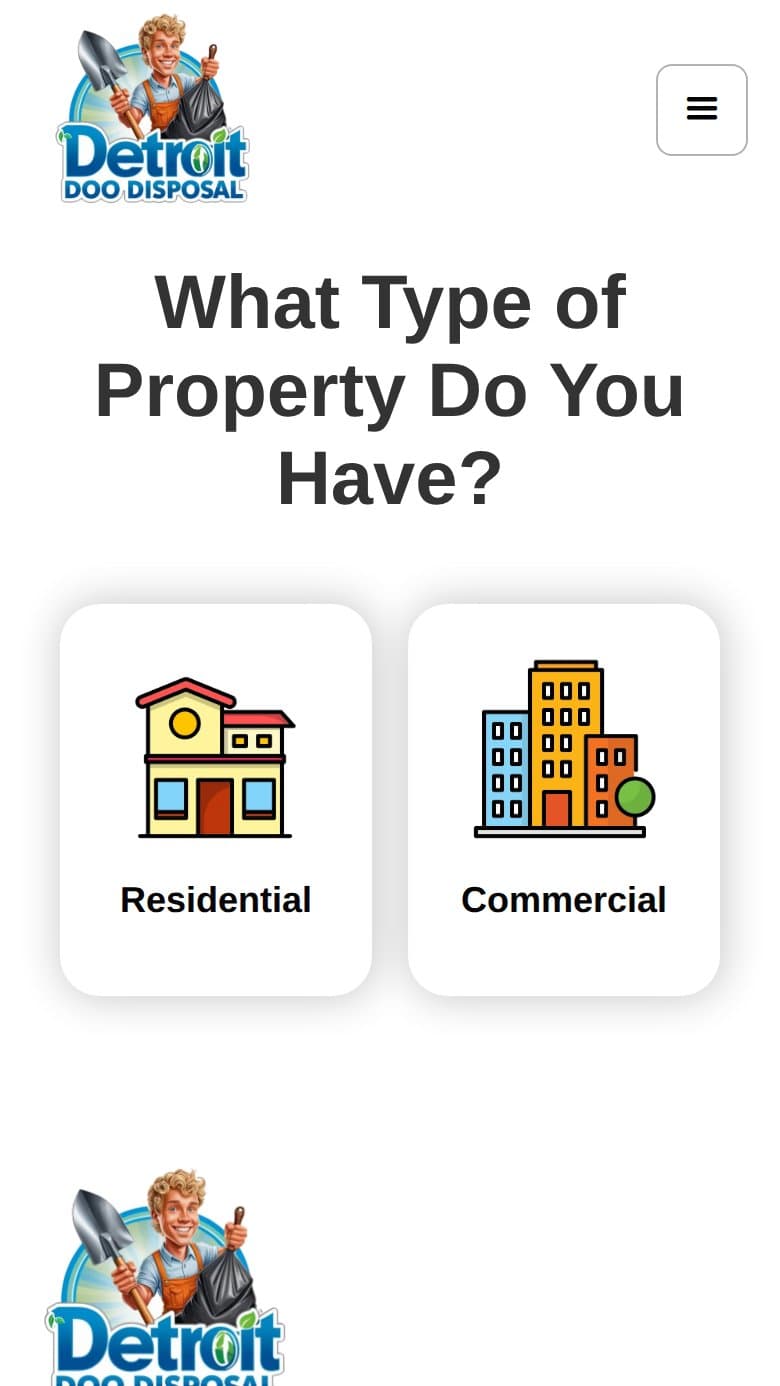
- DesignedSeparate residential and commercial service paths.
- LedLocal SEO structure and service-area targeting.
- DesignedBrand graphics and social post design.
- ManagedSocial accounts and content scheduling.
- ManagedPaid advertising campaigns.
- DesignedTestimonial, partner, and trust-signal presentation.
Strategic approach
How I approached it
Booking is the product
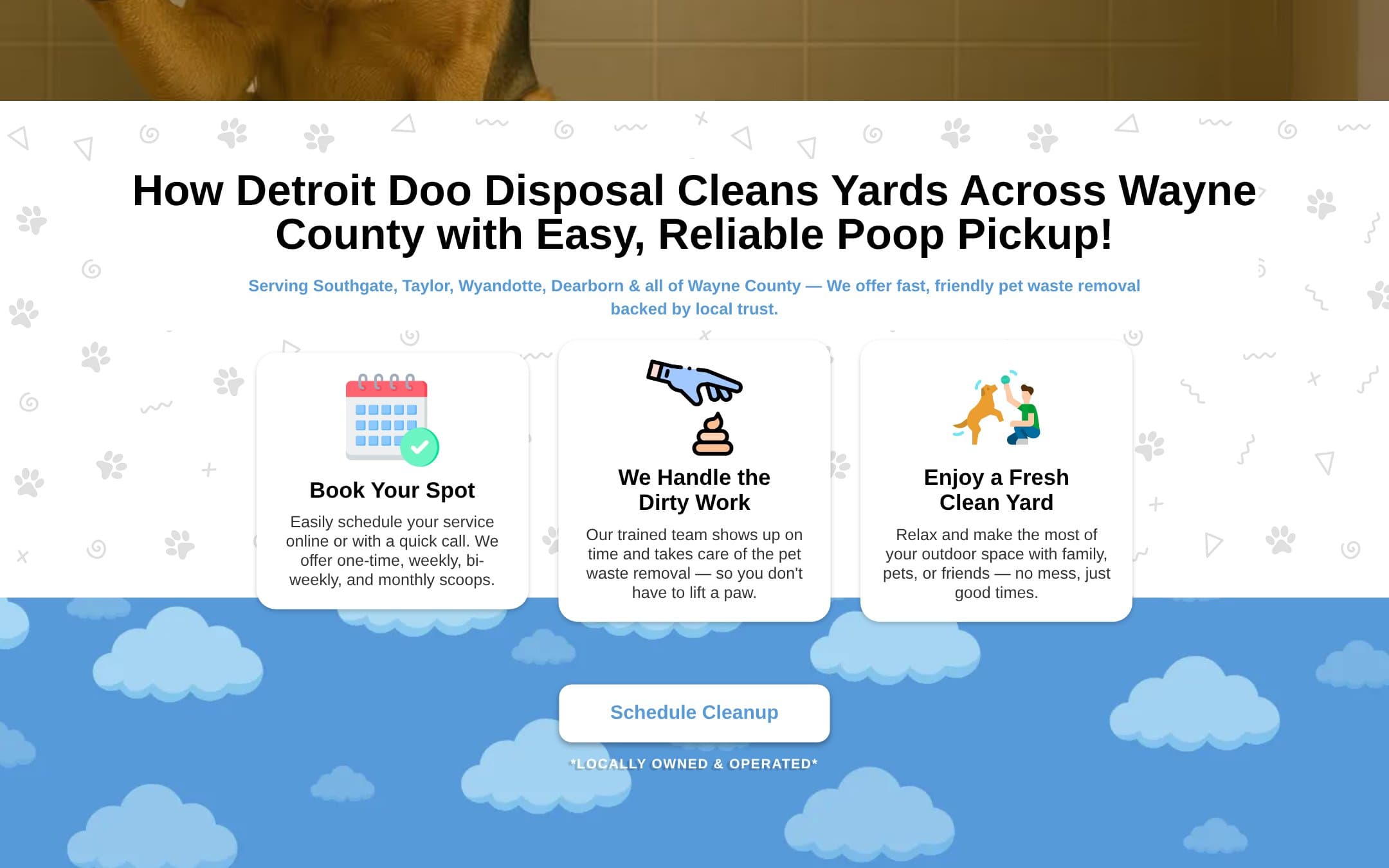
The site was designed around one job: let a stranger become a scheduled customer without a phone call. Everything else on the page exists to remove a reason not to do that.
Keep the voice
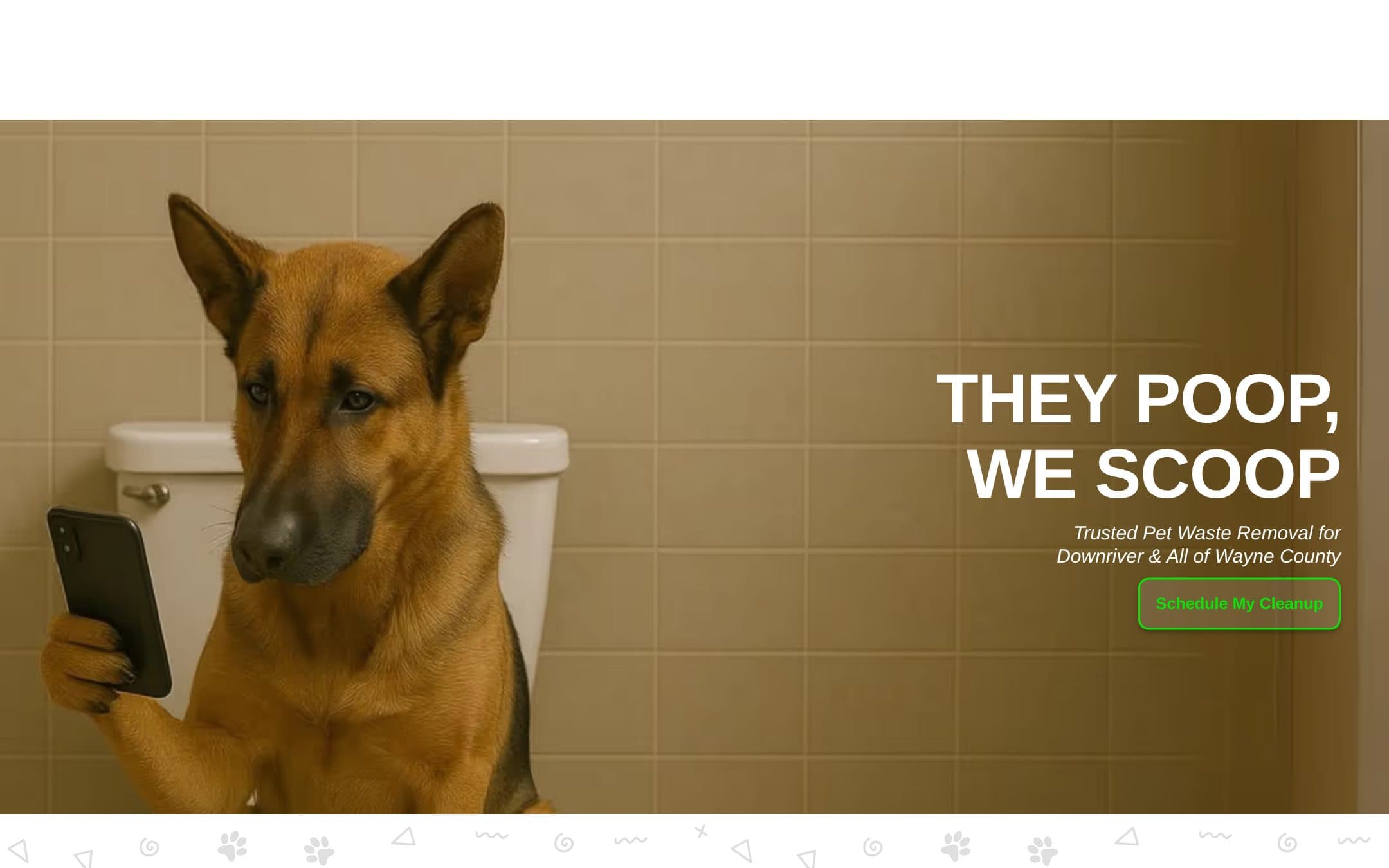
"They Poop, We Scoop" is the kind of line a marketing committee would sand off. It is memorable, it is honest about the service, and it makes a slightly awkward purchase feel easy. It stayed, and the rest of the brand was built to match.
Mobile first, genuinely
Local service searches happen on a phone, often standing in the yard that prompted the search. The booking journey was designed for that context first and expanded to desktop, not the other way around.
Local proof over generic credibility
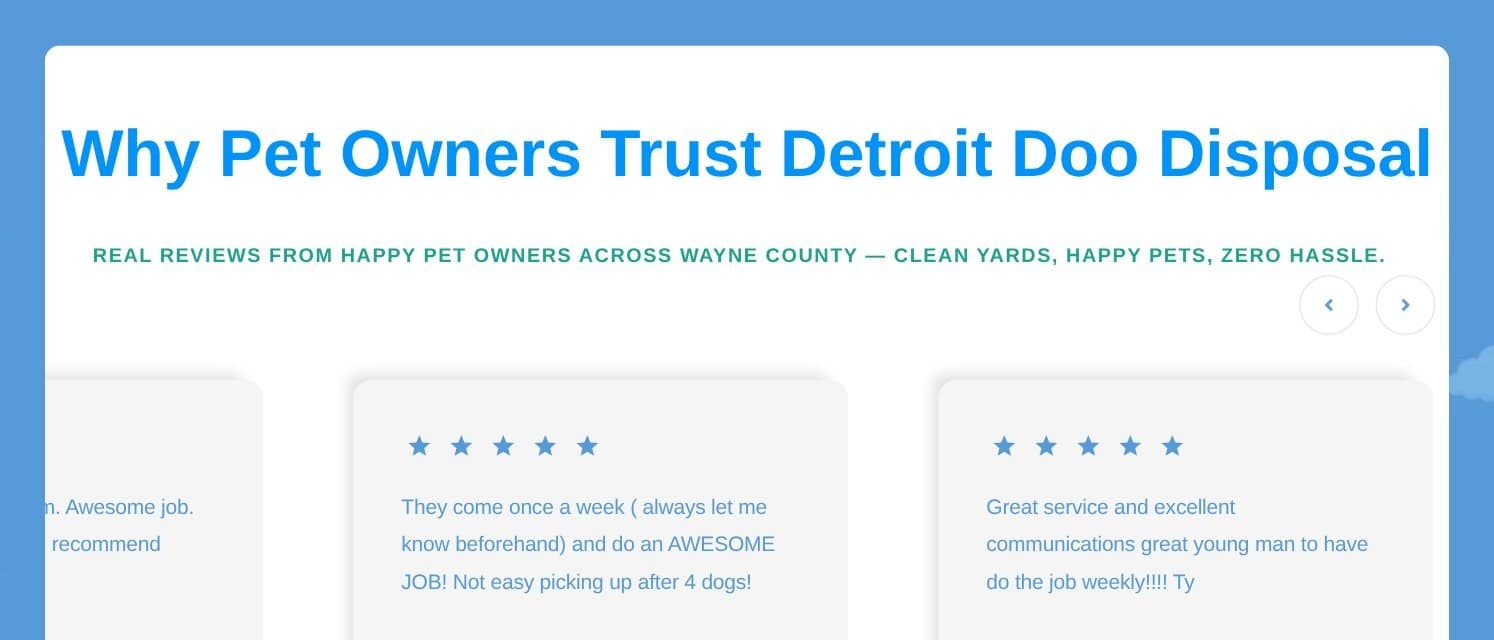
Trust for a service like this is neighborhood-scale. Reviews, service-area visibility, owner storytelling, and local partnerships do more work than any claim about quality.
The journey
The path it had to support
- FindLocal search for a Downriver service area term, on a phone.
- UnderstandWhat the service is, how often it runs, and what determines the price.
- TrustReviews, the owner's story, local partnerships, and service-area proof.
- Choose a pathResidential or commercial, which are different conversations.
- BookComplete a booking online without waiting for a callback.
- ConfirmThe owner receives a real scheduled customer rather than a voicemail.
What was built
Designed, specified, and shipped
- Website strategy, design, and development
- Information architecture and customer journey
- Residential and commercial service presentation
- Online booking integration
- Local SEO structure and service-area targeting
- Brand graphics
- Social post design and content scheduling
- Social account management
- Paid advertising management
- Testimonial and trust-signal presentation
- Local partnership visibility
Selected work
Captured from the live site.Selected visual work
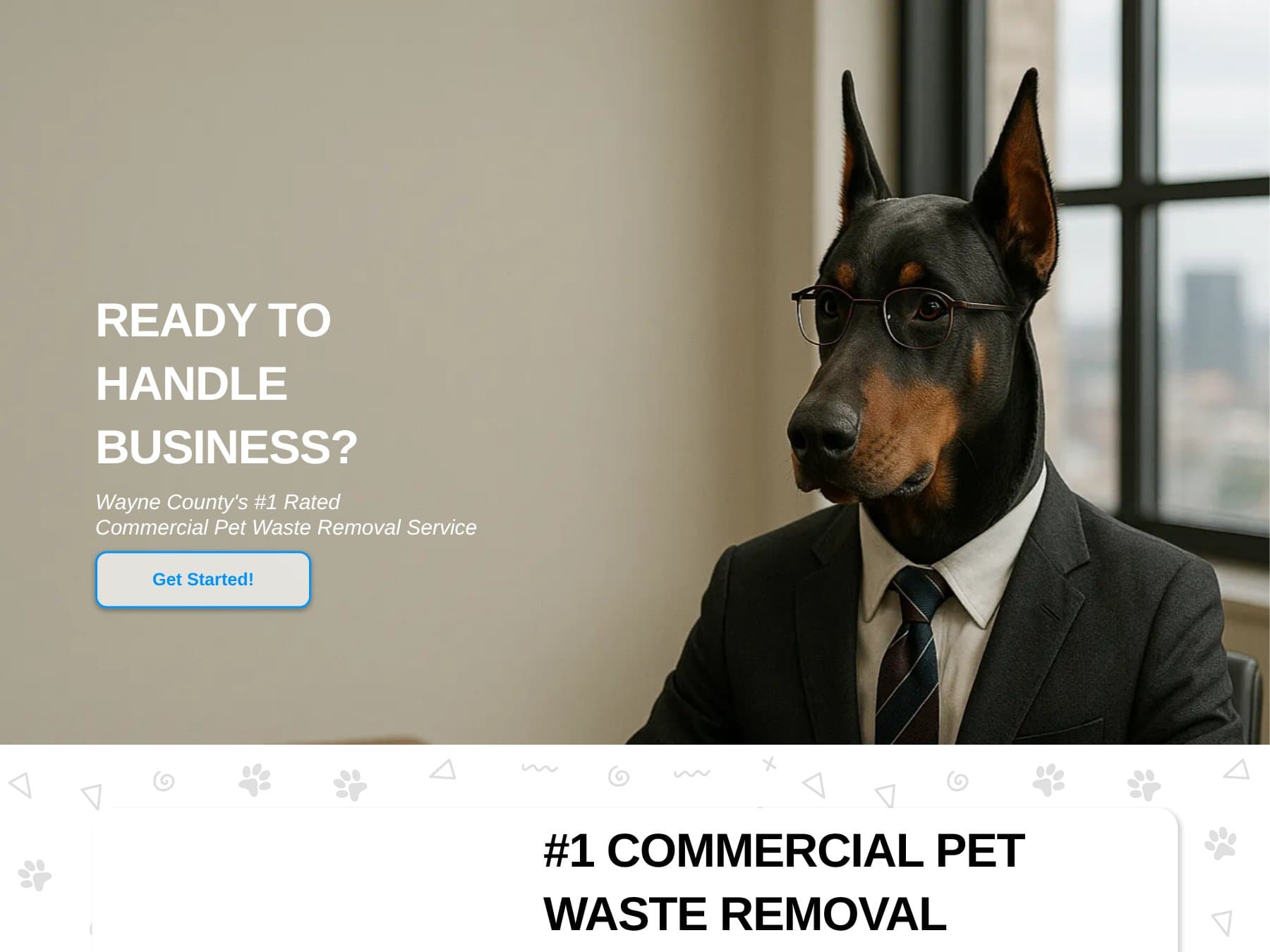
Systems
Systems and integrations
- Webflow
- Website platform
- Online booking integration
- Converts a visitor into a scheduled customer
- Google Business Profile
- Local search presence and reviews
- Google Ads and Meta advertising
- Local paid acquisition
Outcome and evidence
Numbers only where there is proof.What came of it
The business gained a booking path that works without the owner being reachable, a consistent local brand, and a managed presence across search, social, and paid advertising.
Brendan reports that the business experienced growth during the engagement. Specific figures are not published here until supporting evidence is supplied.
Online booking
Created a booking path that lets a customer schedule service without a phone call.
Local brand consistency
Established a consistent brand voice and graphic system across the website, social content, and paid advertising.
Business growth
Brendan reports the business experienced growth during the engagement.
Held back on purpose
4 further results are awaiting supporting evidence and are intentionally not published here. Numbers appear on this site only once they can be backed by a screenshot, a report, or written client confirmation.
How results are stated on this site
- Verified
- Backed by a screenshot, report, or written client confirmation. May be shown as a figure.
- Qualitative
- True and describable, but not measured. Shown as language, never as a number.
- Pending
- Claimed but unconfirmed. Never published until evidence exists.
Reflection
What I would tell you about it
The instinct on a project like this is to make the business sound bigger than it is. That would have been a mistake. The owner being a real, local, findable person was the strongest asset available, and the site was built to lean on that rather than hide it.
The booking integration mattered more than any design decision. It changed what the business could do while the owner was working.
This engagement is also the clearest example of why I keep marketing and operations in the same conversation. Advertising into a business that cannot take a booking is an expensive way to generate voicemail.
Related work
Different industry, same shape
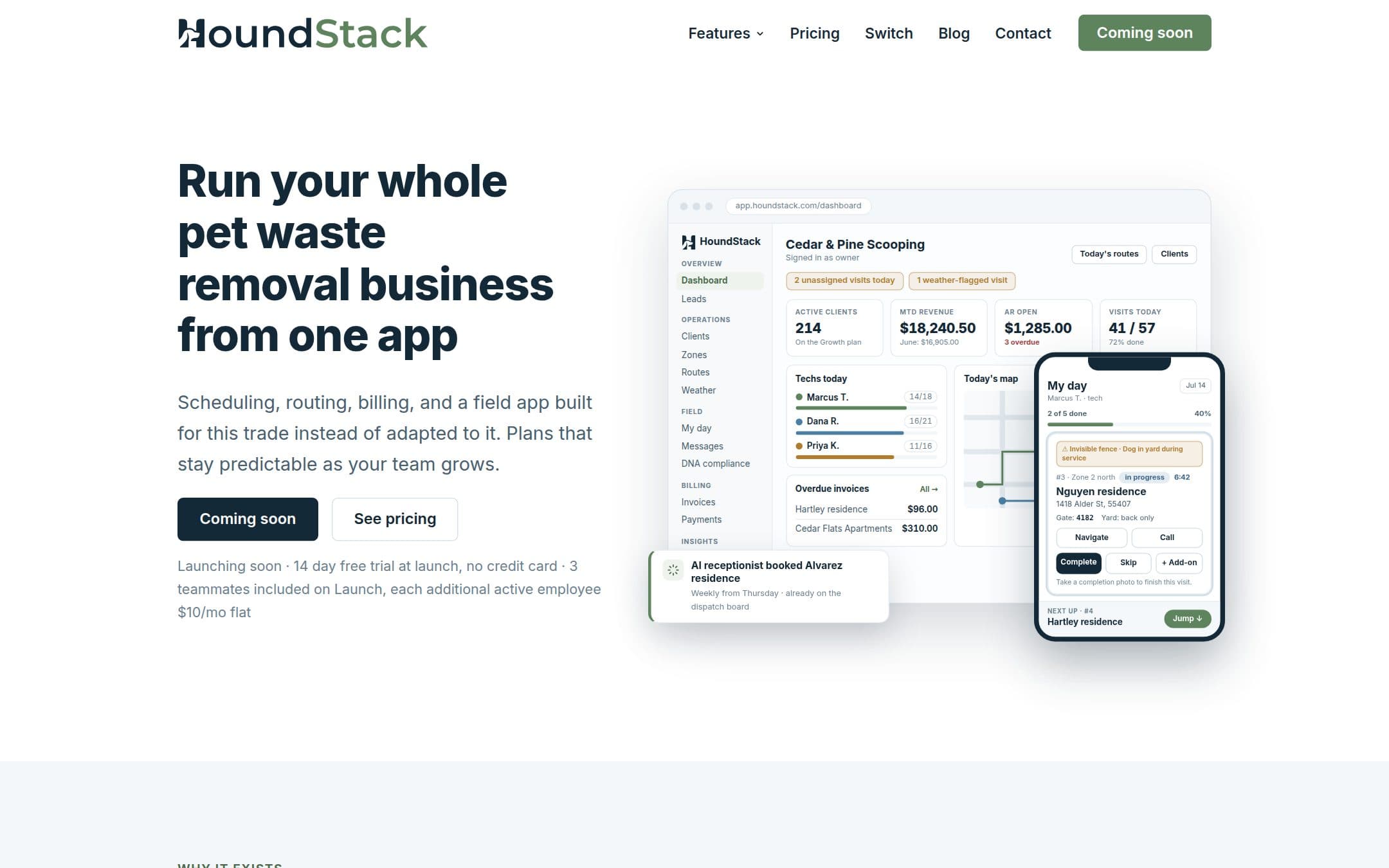
Software product
HoundStack
Specialized operations software for pet waste removal companies, built by working outward from the one thing the whole business depends on: the route.
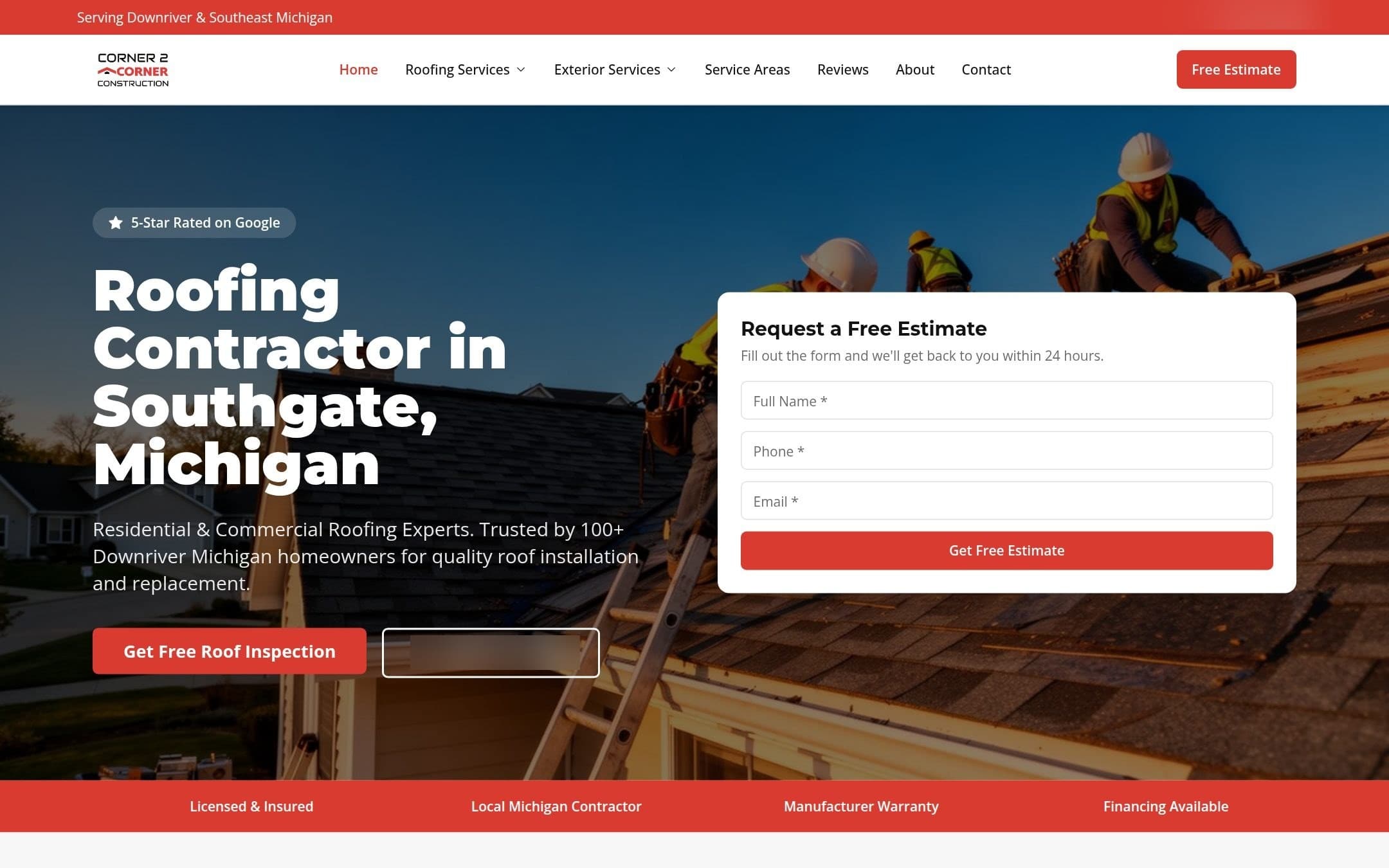
Construction and exterior services company
Corner 2 Corner Construction
A construction company whose reputation was entirely offline, and whose website had to make a homeowner comfortable enough to request an inspection.
Working on something like Detroit Doo Disposal?
If your situation rhymes with this one, the conversation is usually short and useful. Tell me where it is stuck.
Open to select opportunities
Working with me
Full-time roles, contract work, project collaboration, speaking, and introductions. This one comes straight to me.
Hiring The North
Digital strategy, business systems, customer journeys, websites, automation, and operational infrastructure. Delivered through The North.